Siding needs to be replaced when the damage is spread across the house, when water is getting behind it, or when the material itself is breaking down. One cracked panel is a repair. Soft boards on every wall are a replacement.
This guide shows the signs to look for, how to check your own house siding in about 15 minutes, and how to choose between a repair and a full replacement in Colorado Springs.
The Short Answer
Plan on replacement if you find one or more of these on several walls:
- Cracks, chips or holes in the panels
- Boards that are swollen, soft or crumbling at the edges
- Panels that are warped, buckled or loose
- Paint that peels again soon after repainting
- Heavy fading or a chalky surface
- Woodpecker or pest holes in wood siding
- Mold, mildew or water stains that keep coming back
- Peeling paint or damp spots on the inside of exterior walls
How to Inspect Your Siding in 15 Minutes
Check your siding once a year and after every hailstorm. You need a screwdriver and your phone camera.
- Walk around the whole house. Look at each wall from a few feet back, then along the wall from one end. Waves, bulges and loose panels show best at an angle.
- Look at the boards from below. Chips and cracks hide on the bottom edges.
- Check where water runs. That means the lowest rows near the ground and the areas under gutters and roof edges.
- Use the screwdriver. Press the tip gently into any board that looks swollen or stained. Sound siding is hard. If the tip sinks in, the board is rotting.
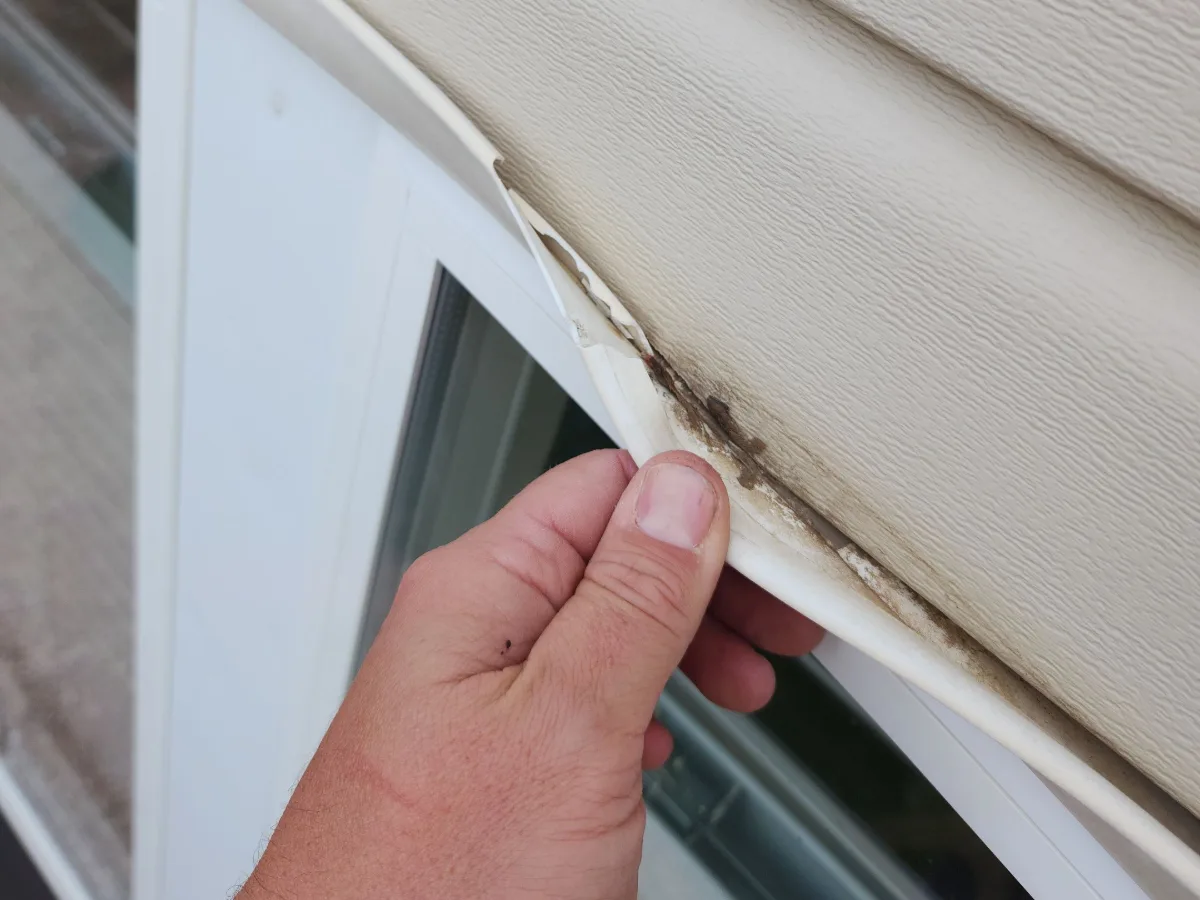
- Check the caulk around windows, doors and trim. Split or dried-out caulk lets water in behind the siding.
- Look up at the soffits and fascia. Note any sagging or loose sections and any gaps where insects can get in.
- Cut back branches and bushes that touch the walls. They hold moisture against the siding and scrape it in the wind.
- Photograph what you find, with one wide shot and one close-up. The photos help with an estimate and with an insurance claim.
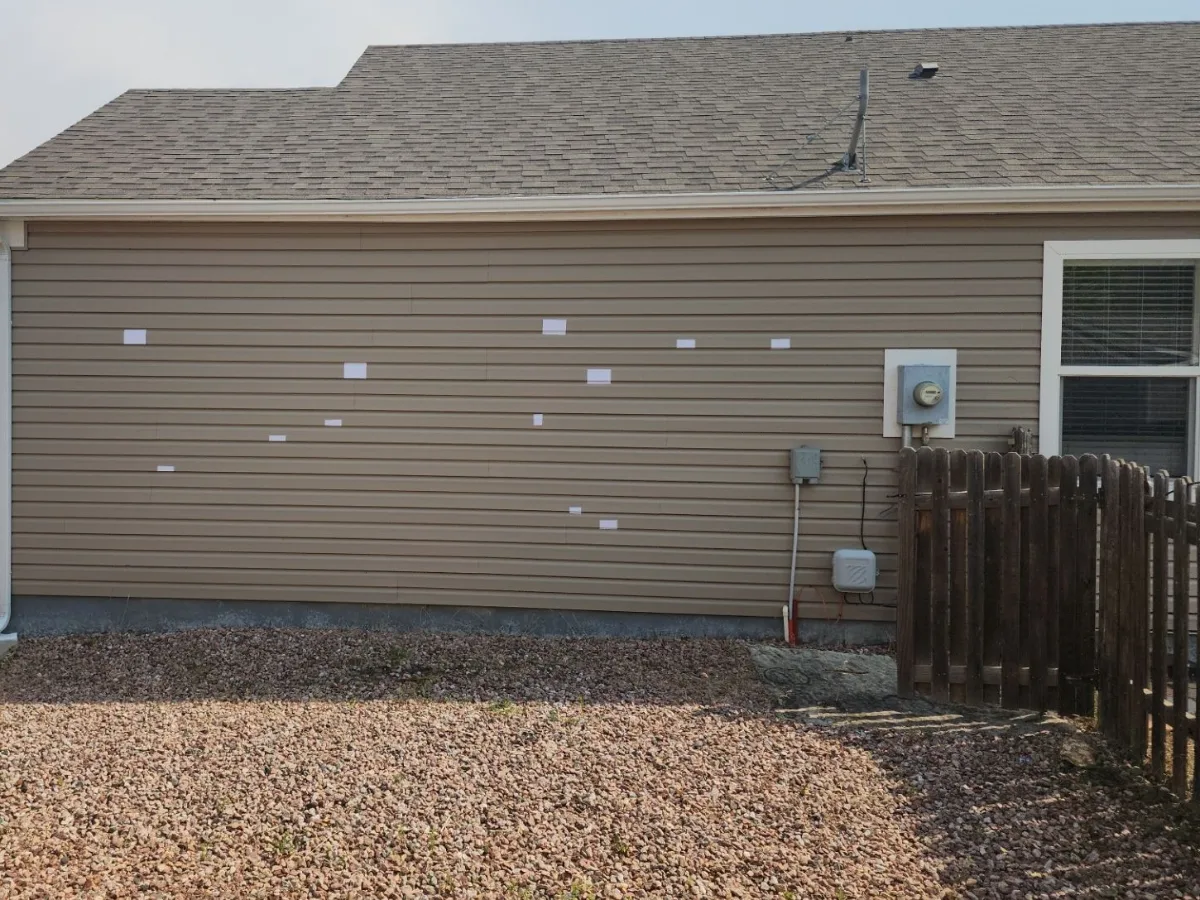
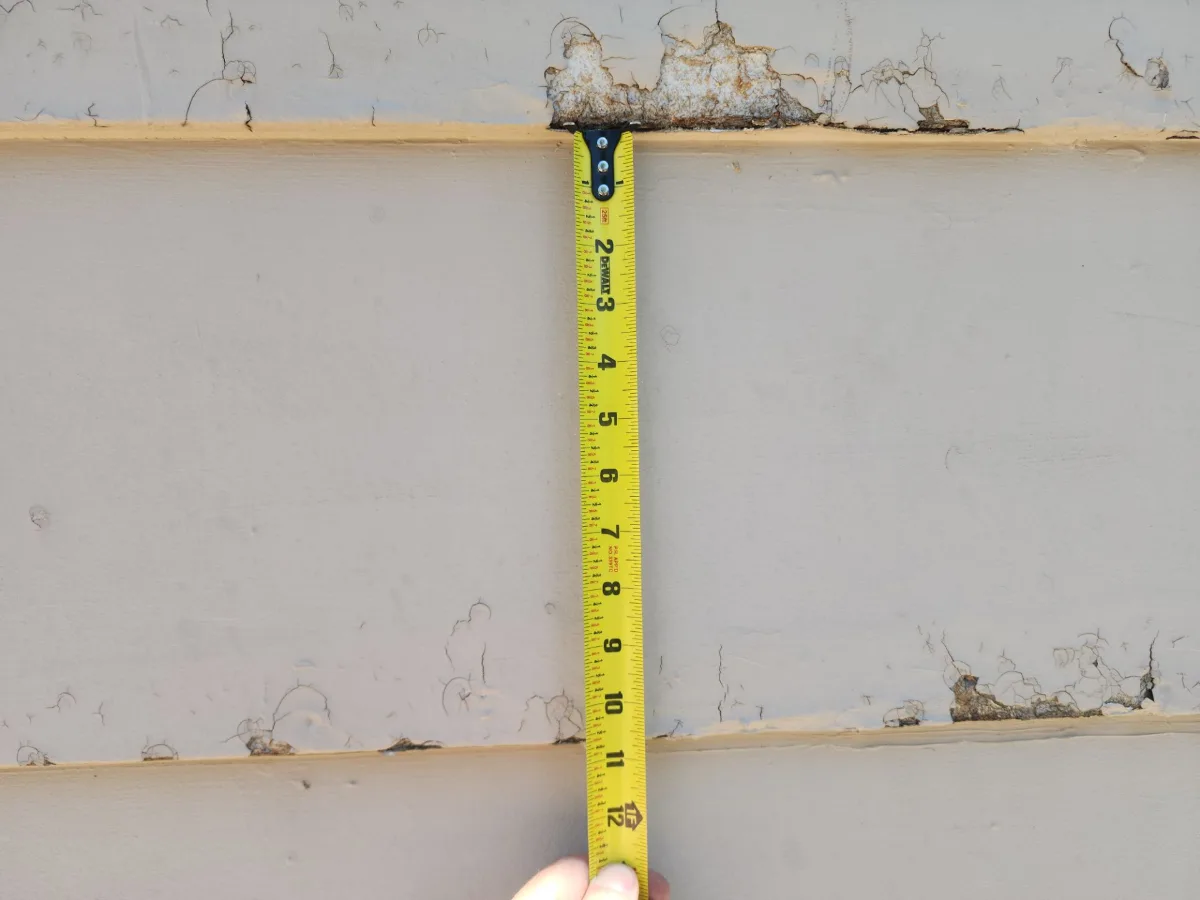
Three examples from homes we inspected:
8 Signs Your Siding Needs to Be Replaced
1. Cracks, Chips and Holes
Hail is the usual cause. The Front Range lies in “Hail Alley,” and Colorado’s damaging hail season runs from mid-April to mid-September, according to the Colorado Division of Homeland Security and Emergency Management. In June 2018, a single storm dropped 3-inch hail on southern Colorado Springs and Fountain (National Weather Service).
On vinyl, hail leaves cracks, chips along the bottom edge of a panel, and round holes. Every opening lets water in behind the panel. A few broken panels on one wall can be repaired if matching panels are still made. Damage on several walls usually means replacement.
2. Swollen, Soft or Crumbling Boards
This is the main sign on wood siding and on hardboard, the pressed-wood lap siding we find on many older Colorado Springs homes. Water gets in at the bottom edge and at the nail holes. The board swells, the paint cracks, and the edge starts to crumble.
Use the screwdriver test. If the tip sinks in, the board has lost its strength and paint will not fix it. Soft boards on more than one wall mean the siding is at the end of its life.
3. Warped, Buckled or Loose Panels
Siding should lie flat against the wall. Panels that bulge, wave or rattle in the wind have come loose or can no longer move with the temperature. A loose panel lets wind-driven rain in behind it, and a strong windstorm can pull a loose section off the wall. One or two loose panels can be re-secured. Waves across a whole wall point to a problem with the installation or with the wall behind it.
4. Paint That Keeps Peeling
If paint peels or blisters again soon after repainting, the board underneath is usually holding moisture. New paint will keep failing until the boards are replaced. This sign applies to wood, hardboard and fiber cement. Vinyl siding is not normally painted.
5. Heavy Fading and a Chalky Surface
Colorado Springs sits above 6,000 feet, and UV levels rise by about 10 percent with every 1,000 meters of altitude (World Health Organization). South and west walls take the most sun. Run your hand over the wall: a white, chalky powder on your palm means the surface is wearing away.
Fading alone does not mean the siding has failed. It does make repairs harder, because a new panel in the original color will look darker than the faded wall around it.
6. Woodpecker and Pest Holes
On cedar and other wood siding, look for round holes and clusters of pecked spots. The northern flicker is responsible for most woodpecker damage to Colorado homes, and cedar, rough pine and redwood siding are damaged most often, according to Colorado State University Extension. Holes let water and insects into the wall, so patch them quickly. When the damage covers large areas, replacing the siding makes more sense than patching it every year.
7. Mold, Mildew or Water Stains
Green or black growth on a shaded wall is often on the surface only and washes off. Growth or dark streaks that come back in the same place, especially below windows and at seams, can mean water is getting behind the siding and not drying out. That is worth a closer look.
8. Damage Inside the House
Peeling paint, loose wallpaper or damp spots on the inside of an exterior wall mean water has already come through. Do not wait on this one. Have the wall inspected, because the damage behind the siding can be larger than what you see inside.
What About High Energy Bills?
High heating and cooling bills alone do not prove that your siding has failed. But when old siding comes off, it is the one chance to add house wrap and insulation behind the new siding. See insulated vinyl siding and our comparison of Tyvek and fanfold insulation.
How to Tell if Wood or Cedar Siding Needs to Be Replaced
Wood siding gives clear signals. Look for boards that are cupped, split or soft under the screwdriver, paint that will not stay on, and woodpecker holes. If the problems are limited to a few boards, a carpenter or handyman can replace them. If you find soft or split boards on most walls, replacement makes more sense than repairing and repainting every few years.
If you like the look of wood, engineered wood siding has the look of real wood, and fiber cement siding comes in wood-grain textures. If you plan to stay with real wood, see our guide to cedar and other wood siding options.
After a Hailstorm: What to Check
Start with the walls that faced the storm. Look for:
- Cracks and holes in vinyl panels, and chips along their bottom edges
- Dents in metal: gutters, downspouts, window trim and garage doors
- Broken or pitted shutters, window screens and light fixtures
- Spatter marks: clean spots where hail knocked the dirt and chalk off the siding
Photograph everything before you clean up or repair anything. Then read our guide to hail and storm damage siding insurance claims. We document every side of the house and meet the insurance adjuster at your home if needed.
Repair or Replace?
A repair makes sense when:
- the damage is in one small area,
- the wall behind the siding is dry and solid, and
- a matching panel or board is still available.
In El Paso County, siding repairs of less than 100 square feet do not need a building permit (Pikes Peak Regional Building Department). Seamless Choice specializes in projects that need a permit, which means 100 square feet of siding or more. Our minimum project is $3,000, and for a single panel or a small patch we will refer you to a handyman.
Replacement makes more sense when:
- the same damage shows on several walls,
- boards are soft, or water has reached the wall behind them,
- the siding is no longer made or is too faded to match, or
- you would be repairing and repainting every few years.
One local rule to know: inside the Colorado Springs Wildland-Urban Interface (WUI), replacing 25 percent or more of your home’s total exterior wall area means the siding on the entire house must be replaced with ignition-resistant materials. Read the WUI siding requirements before you plan a partial replacement.
What We Install
Seamless Choice replaces siding on houses in Colorado Springs and nearby towns. We install vinyl siding, James Hardie fiber cement siding and engineered wood siding such as LP SmartSide. We pull the building permit, and every residential job is backed by our 10-year workmanship warranty.
Frequently Asked Questions
1. How do I know if my siding needs to be replaced or only repaired?
A repair works when the damage is in one small area, the wall behind it is dry, and a matching panel is still available. Plan on replacement when the same damage shows on several walls, when boards are soft, or when the siding can no longer be matched.
2. Can I replace the siding on just one wall?
Often, yes. Two things can get in the way. New siding rarely matches faded siding on the other walls. And inside the Colorado Springs Wildland-Urban Interface, replacing 25 percent or more of the home’s total exterior wall area requires the siding on the entire house to be replaced. We check both at your house before we quote.
3. Does homeowners insurance pay for siding replacement?
It can, when the damage comes from a covered event such as hail or wind. It depends on your policy and on where the damage is. Insurers usually pay for the sides that have damage. Normal wear from age is usually not covered. Our guide to siding insurance claims explains each step.
4. Do I need a permit to replace siding in Colorado Springs?
Yes. The Pikes Peak Regional Building Department requires a permit for siding replacement; only repairs under 100 square feet are exempt. We pull the permit for you.
5. How much does it cost to replace siding?
It depends on the size of the house, the siding you choose, how many walls are being replaced, and what we find under the old siding. We do not give estimates online or over the phone. We measure your house and give you a written, itemized estimate for free. Our minimum project is $3,000. See our FAQ for more.
6. How often should I inspect my siding?
Once a year, and after every hailstorm. Colorado’s damaging hail season runs from mid-April to mid-September, so late September is a good time for the yearly check.
Want Us to Look at Your Siding?
If you found one of these signs on your house, we will look at it with you. The estimate is free and is done at your home. Call (719) 445-7888 or request a time online.